
Metformin: Overview & Key Facts
Metformin is a prescription medication primarily used to treat type 2 diabetes. It works by improving the way your body responds to insulin and decreasing the amount of sugar your liver releases into the bloodstream. As an adjunct to diet and exercise, it helps control high blood sugar levels in adults with type 2 diabetes mellitus.
The effectiveness of Metformin is well-established through clinical studies and real-world use. Most patients notice improvement in blood glucose control within 1-2 weeks, with full effects typically seen in 2-3 months. It can be used alone or in combination with other diabetes medications when diet and exercise alone are insufficient.
Metformin should be taken with meals to minimize gastrointestinal side effects. The dosage must be balanced against diet, exercise, and individual response. Regular monitoring of blood sugar levels is essential, and any changes to diet, exercise, or medication should be discussed with your healthcare provider to prevent hypoglycemia (low blood sugar).
Key Safety Considerations
Use with caution in pregnancy/breastfeeding
Use in children needs close monitoring
Dose adjustment or close monitoring in elderly
Avoid or limit alcohol consumption
May increase heart rate/jitteriness; consider limiting
Avoid grapefruit/grapefruit juice/citrus
Use caution if lactose intolerant
Some foods affect this medicine; follow timing/food advice
May affect alertness and coordination; use caution
Side Effect Analysis
Trend of Reported Side Effects
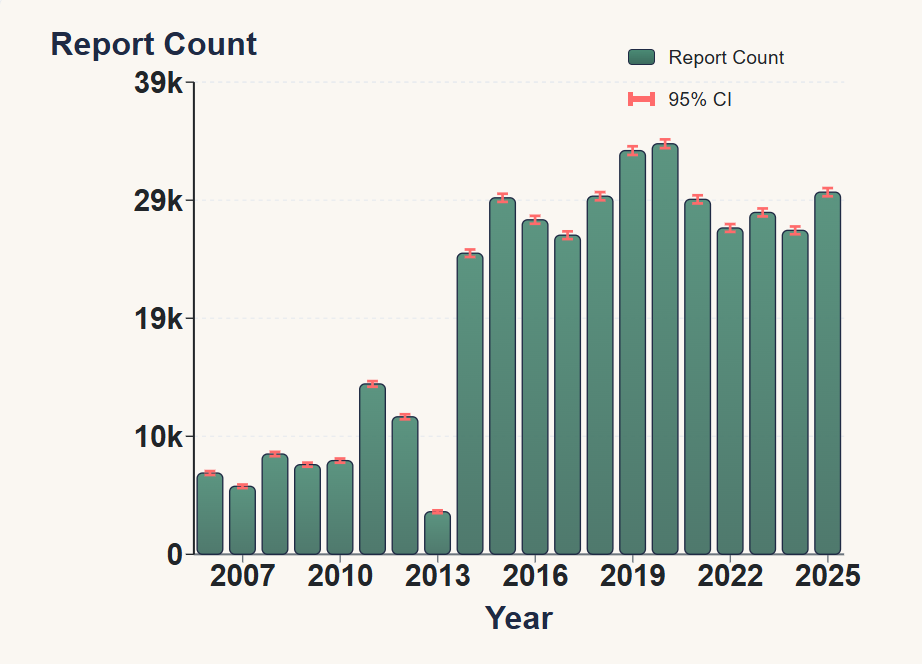
Visualization showing the trend of reported Metformin side effects from 2006 to 2025 based on FDA database analysis.
Total Reports Analyzed
409,799 reports over 20 years
FDA database with detailed data
Reporting Trend
20,490 average yearly reports
↗ Increasing trend over time
Demographic Distribution
206,717 female cases
175,915 male cases
Peak
reports: 50-79 age range
Data Source & Updates
FDA Database
Updated: Jan 11, 2026
95% confidence intervals
applied
Top Reported Side Effects
From 409,799 FDA reports, most frequently mentioned:
Note: Report counts reflect frequency of reporting, not severity or causality.
Critical Safety Warnings
Based on FDA-approved prescribing information and user reports:
- Black Box Warning: Lactic acidosis risk - 18,654 reports
- Age Considerations: Dose adjustment needed for elderly (65+)
- Kidney Monitoring: 17,182 acute kidney injury reports
- Alcohol Interaction: Avoid or limit alcohol consumption
- Contrast Procedures: May need to temporarily stop medication
Lactic Acidosis Warning
18,654 reports in FDA database
Symptoms include malaise, myalgias, respiratory distress, somnolence, and abdominal
pain. Risk factors include renal impairment, age ≥65, contrast studies, and
excessive alcohol intake.
Frequently Asked Questions
Why are there 18,654 lactic acidosis reports if it's considered rare?
While lactic acidosis is medically considered "rare" (affecting less than 1% of users), the 18,654 reports reflect 20 years of FDA data collection across millions of Metformin users. This highlights the importance of monitoring for symptoms, especially in high-risk groups (renal impairment, elderly, alcohol users).
What does "Drug Ineffective" (21,443 reports) mean in this context?
This doesn't necessarily mean Metformin doesn't work. These reports could indicate: 1) individual variation in response, 2) need for dose adjustment, 3) progression of diabetes requiring additional treatments, or 4) reporting of continued high blood sugar levels despite medication use.
How should I interpret the age distribution data?
The peak reports in the 50-79 age range reflect: 1) higher prevalence of type 2 diabetes in older adults, 2) longer duration of medication use, and 3) potentially increased monitoring and reporting in this age group. It doesn't necessarily mean Metformin is less safe for younger users.
How does MeMeds analysis complement Mayo Clinic guidelines?
Mayo Clinic provides evidence-based treatment protocols. MeMeds adds real-world evidence showing how side effects actually manifest across different populations. For example, while guidelines mention "GI side effects," our data shows nausea affects 7% and diarrhea affects 6.4% of reported cases, with demographic variations.
Access real-world side effect data across 100M+ data points
Go beyond summary statistics. Use the MeMeds app to explore interactive charts, filter by demographics, compare side effect frequencies, and make data-informed decisions about your health.
Dive Deeper with MeMeds Interactive Analysis
The static data above shows only the surface. In the MeMeds app, you can explore:
- Interactive Age Distribution - See exact case counts for age group
- Annual Trend Analysis - Track reporting patterns
- Complete Side Effect List - Access up to 100 reported effects
- Real-time Updates - Get the latest data as it's processed
MeMeds transforms raw scientific and regulatory data into actionable insights personalized for your situation.
📋 Important Data Interpretation Notes
Database Limitations: These reports come from real-world data and scientific
evidence.
Report counts don't equal incidence rates.
Medical Context Required: This data should be discussed with healthcare
providers who
can interpret it in the context of your individual health situation.
Not Medical Advice: This analysis is for informational purposes only. Always
follow
your doctor's prescribed treatment plan.
Article Disclaimer: This content is for informational purposes only and does not provide medical advice. Always consult your healthcare provider before starting or changing any medication.