
Levothyroxine: Why Am I Still Tired?
Overview & Key Facts
Levothyroxine is a prescription medication used to treat hypothyroidism, a condition where the thyroid gland does not produce enough thyroid hormone. It is also used to reduce the size of enlarged thyroid glands (goiter) and as part of treatment for thyroid-dependent well-differentiated thyroid cancer. Many patients ask, “Why am I still tired on levothyroxine?”—this page uses real‑world data to help frame that discussion with your clinician.
Available only by prescription, Levothyroxine comes in various dosage forms including tablets, liquid-filled capsules, and oral solutions. Like all medications, it should be taken under the supervision of a healthcare provider.
The decision to start Levothyroxine should weigh its benefits against potential risks. People with heart disease, adrenal gland issues, or other significant health conditions should consult a doctor before using this medicine. Close monitoring with blood tests is essential to ensure proper dosing and safety.
Key Safety Considerations
Insufficient data, consult a doctor
No specific pediatric restrictions reported
Use in children needs close monitoring
No specific geriatric restrictions reported Dose adjustment or close monitoring in elderly
No serious interaction reported
No reported interaction
Avoid grapefruit/grapefruit juice/citrus
No reported interaction
Some foods affect this medicine; follow timing/food advice
Real‑World Levothyroxine Side Effects: Fatigue, Nausea, Diarrhea & More
Trend of Reported Side Effects
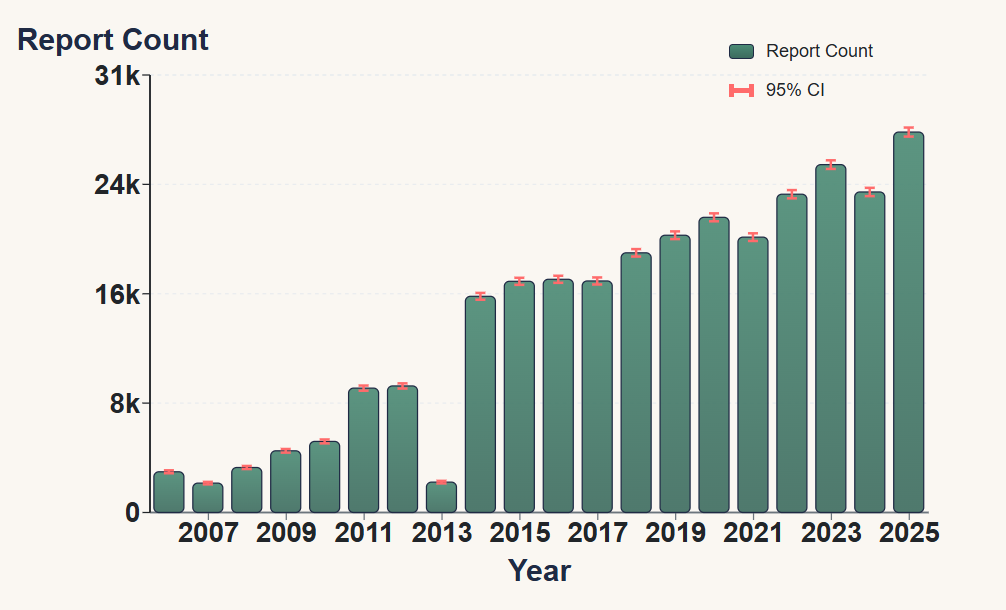
Visualization showing the trend of reported side effects from 2006 to 2025 based on FDA database analysis.
Total Reports Analyzed
280,820 reports over 20 years
14,041 average yearly report
Demographic Distribution
200,566 female cases
64,671 male cases
Peak
reports: 60-79 age range
Data Source & Updates
FDA Database
Updated: Jan 28, 2026
95% confidence intervals
applied
Top Reported Side Effects
If you’re wondering “Is my fatigue or nausea from levothyroxine?”, these are the most frequently reported symptoms in FDA side effects reports.
*Report counts reflect frequency of reporting, not severity or causality.
Critical Safety Warnings
- Cardiovascular symptoms: chest pain or tightness, irregular or racing heartbeat, fainting, dilated neck veins, sweating
- Breathing & swallowing difficulty: labored or irregular breathing, difficulty swallowing
- Kidney-related symptoms: decreased urine output
- Severe fatigue & systemic effects: extreme fatigue, fever, heat intolerance, irritability
- Allergic reactions: hives or welts, itching, rash or redness, swelling of eyes, face, lips, throat, or tongue
- Neurologic effects: tremors, dizziness, blurred or double vision, seizures, severe headache
- Musculoskeletal & growth effects: pain in arms, jaw, back, neck, hip, or knee; limping; slowed growth in children
- Gastrointestinal & hormonal effects: nausea, menstrual changes
🚨 Seek Immediate Medical Attention
Contact your doctor immediately if you experience chest pain, breathing or swallowing difficulties, extreme fatigue, fainting, fever, irregular heartbeat, decreased urine output, tremors, seizures, vision changes, severe headache, or swelling of the face, lips, or throat.
Get emergency help immediately if symptoms of overdose occur, including confusion or disorientation, change or loss of consciousness, cold clammy skin, fast or weak pulse, lightheadedness, sudden headache, sudden loss of coordination, or slurred speech.
These reactions may indicate serious or life-threatening conditions and require urgent medical evaluation.
Frequently Asked Questions
Why am I still tired even though my thyroid tests are ‘normal’ on levothyroxine?
Persistent fatigue on levothyroxine can reflect non‑thyroid causes, suboptimal dosing, or absorption issues. Use this data as a starting point for a deeper review with your clinician rather than changing your dose on your own.
Can Levothyroxine be used during pregnancy?
Levothyroxine is generally considered safe during pregnancy, but dosing may need to be modified. Always consult your doctor if you become pregnant while on this medicine.
Why is timing important with Levothyroxine?
Levothyroxine should be taken on an empty stomach in the morning, 30–60 minutes before breakfast, to ensure proper absorption. Interactions with certain foods, supplements, and medications can reduce effectiveness.
Are there serious side effects to watch for?
Call your doctor immediately if you notice rapid or irregular heartbeat, chest pain, leg cramps, confusion, swelling, or signs of severe hypothyroidism. Some effects can be life-threatening if untreated.
How does MeMeds analysis complement Mayo Clinic guidance?
Mayo Clinic guidance is based on clinical trials and established medical evidence, highlighting side effects that may require medical attention (such as chest pain, breathing difficulty, neurologic symptoms, allergic reactions, and kidney-related changes), as well as common but usually self-limited effects like nausea or diarrhea.
MeMeds complements this guidance by analyzing real-world safety reports from regulatory sources (such as the FDA) and published scientific evidence, revealing how frequently these effects occur across large, diverse populations outside controlled trials. In practice, the most commonly reported real-world effects include fatigue (21,657), nausea (18,677), diarrhoea (17,510), headache (15,028), dyspnoea (14,570), and dizziness (13,059).
This real-world perspective helps contextualize Mayo Clinic warnings by showing which symptoms patients most often experience, how frequently serious signals (such as acute kidney injury, chest pain, loss of consciousness, or confusional states) are reported, and which side effects tend to dominate everyday patient experiences.
Access real-world side effect data across 100M+ data points
Go beyond summary statistics. Use the MeMeds app to explore interactive charts, filter by demographics, compare side effect frequencies, and make data-informed decisions about your health.
Dive Deeper with MeMeds Interactive Analysis
The static data above shows only the surface. In the MeMeds app, you can explore:
- Interactive Age Distribution - See exact case counts for age group
- Annual Trend Analysis - Track reporting patterns
- Complete Side Effect List - Access up to 100 reported effects
- Real-time Updates - Get the latest data as it's processed
MeMeds transforms raw scientific and regulatory data into actionable insights personalized for your situation.
📋 Important Data Interpretation Notes
Database Limitations: These reports come from real-world data and scientific
evidence.
Report counts don't equal incidence rates.
Medical Context Required: This data should be discussed with healthcare providers
who
can interpret it in the context of your individual health situation.
Not Medical Advice: This analysis is for informational purposes only. Always follow
your doctor's prescribed treatment plan.
Article Disclaimer: This content is for informational purposes only and does not provide medical advice. Always consult your healthcare provider before starting or changing any medication.